
Roswell Wood Flooring helps homeowners replace carpet with hardwood in Roswell, GA, serving surrounding cities including Alpharetta, Dunwoody, Milton, Sandy Springs and Johns Creek. With more than 20 years of carpet-to-wood conversions behind us, we handle everything from a single bedroom to a whole upstairs, including the stairs and two-story landings that often tie those rooms together.
Many homes built in the 1980s and 1990s were finished with hardwood in the foyer and main rooms and carpet everywhere else, including bedrooms, bonus rooms and stairs. Replacing that carpet with hardwood makes rooms easier to clean, better for allergies and more consistent from floor to floor. The work starts with finding out what is under the carpet, because that decides whether you need new flooring or a refinish.
What Is Under the Carpet
Hidden Hardwood You Can Refinish
In some homes, especially older ones, the carpet was laid directly over a hardwood floor. Pulling it up can reveal oak or pine in surprisingly good condition, with only staple holes, tack strip damage and a few stains to deal with. Refinishing that floor is often far cheaper than installing new hardwood, and it keeps the original wood.
We check a closet corner or a floor vent first, so you know before any work begins. If the hidden floor has pet stains or water damage, we replace the affected boards before sanding, so the refinished floor looks consistent across the room.
Plywood or OSB Subfloor
In most homes built in recent decades, carpeted rooms sit on a plywood or OSB subfloor with no hardwood at all. That subfloor becomes the base for your new floor, so its condition matters. We check for squeaks, loose panels, soft spots and dips before installing anything, since hardwood will reveal every flaw beneath it.
Loose panels are screwed to the joists, high spots are planed and low spots are filled. Where a leak or pet has softened the subfloor, we replace that section. This preparation is what keeps a new floor quiet and flat for decades.
Carpet Pad, Tack Strip and Staples
Removing carpet is more than pulling it up. The carpet pad is often stapled to the subfloor, and the tack strip is nailed around every wall. We remove all of it, pull every staple and fill the holes, so nothing lifts through or shows under the new floor.
Tack strip removal can split the edges of an underlying hardwood floor or the subfloor, so we work carefully and repair any damage. That attention at the edges is what gives the finished room clean lines at the baseboards.
Choosing the New Floor
Solid or Engineered Hardwood
On upper floors over a wood subfloor, solid hardwood is the most durable choice, since it can be sanded and refinished many times. Engineered hardwood is the better option in basements and over slabs, and it also works upstairs when a thinner floor helps with transitions or door heights.
We match the product to each room, which can mean solid oak upstairs and engineered wood in a finished basement. What matters is that each floor suits its conditions, not that every room uses the same product.
Matching Existing Hardwood Downstairs
If your main floor already has hardwood, the new upstairs floor usually should match it, especially where the stairs connect the two. We install the same species and width, often red oak, and site-finish the new floor so the stain matches. Refinishing the existing floor at the same time gives the closest match.
If the existing floor is staying as it is, we match its current color, which may include decades of amber from an oil-based finish. Samples on both floors let you compare before committing.
Prefinished or Site-Finished
Prefinished hardwood arrives already finished, so bedrooms can be used soon after installation, but it has small beveled edges and is harder to match to an existing floor. Site-finished hardwood is sanded and finished in place, making it easier to blend with the rest of the house.
For a carpet replacement that connects to existing hardwood, we usually recommend site-finished flooring. For a standalone area such as a bonus room, prefinished can be faster and less disruptive.
Stairs, Landings and Transitions
Carpeted Stairs to Hardwood
Stairs are often the most dramatic part of a carpet replacement. The treads under stair carpet are usually rough construction lumber, so we install new hardwood treads, risers and nosing, matched to the floors above and below. We quote the stairs tread by tread, separately from the floor.
Many homeowners choose painted risers with stained treads for a clean contrast. We plan the stairs alongside the floors, so the colors and the transitions at the top and bottom work together.
Two-Story Landings and Hallways
In homes with a two-story foyer, the upstairs landing and balcony are visible from below, so the new hardwood must line up neatly with the stair nosing and railings. We run the landing boards so the pattern looks deliberate from the foyer as well as from the hallway.
Tying the landing into the bedrooms and hallway creates one continuous floor upstairs instead of a patchwork of carpet and wood. Where the balcony edge meets the railing, we fit each board and the nosing closely, since that edge is seen from the room below every day.
Doors, Heights and Transitions
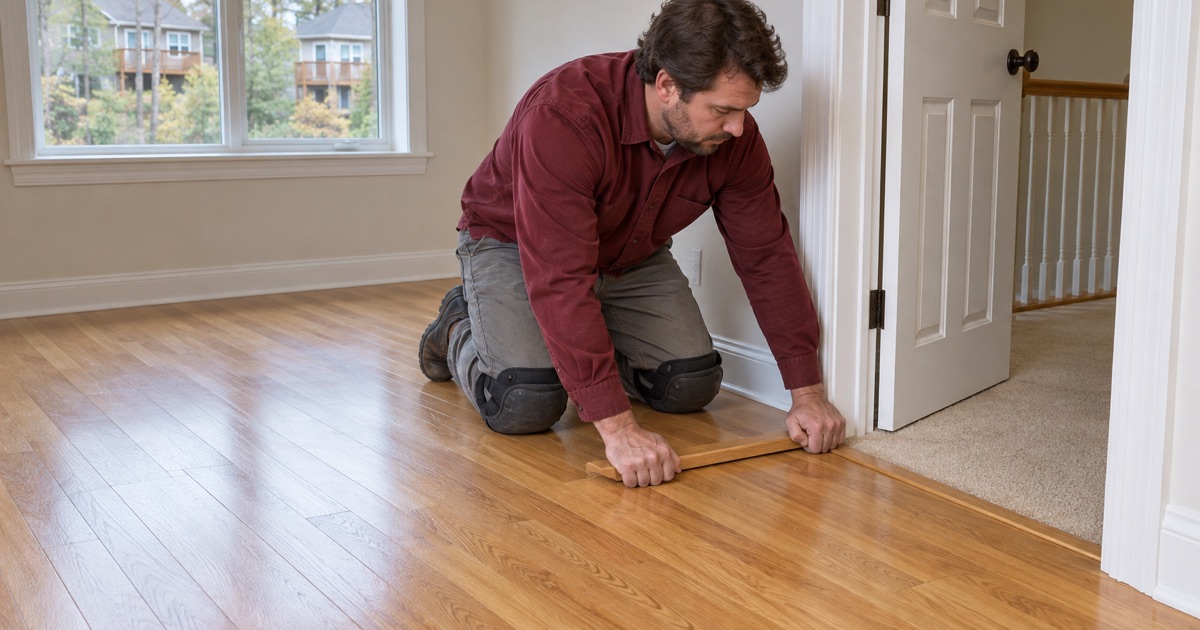
Hardwood is often lower than thick carpet and pad, which changes door clearances and the height where rooms meet. We measure before ordering, trim doors where needed and install reducers or thresholds at tile, vinyl and any remaining carpet. Clean transitions keep the new floor safe and finished.
In townhomes and condominiums, your association’s declaration may also require an underlayment beneath hard floors to limit noise to the unit below. We confirm those rules and your written approval before work starts, so the new floor meets them from the first day.
- 20+ Years on Wood Floors
- Moisture Read Before Sanding
- Stain Samples on Your Floor